Consulting New Internet Business Stategy Planning for SK Telecom, 2008.
글쓴이 아카이브: Kyoung Jun Lee
Professor of Kyung Hee Univ.
Development of Value Innovation Methodology
Value Changes in Near Future and Value Innovative Product/Service Planning, Samsung Advanced Institute of Technology, 2008.
An Explorative Study for Business Models for Sustainability
Kyoung Jun Lee and Federico Casalegno, An Explorative Study for Business Models for Sustainability, In Proceedings of the 14th Pacific Asia Conference on Information Systems, July 9-12, Taipei, Taiwan, 2010. pdf
Abstract
Sustainability now becomes one of the key issues in innovating existing environments, where we live, and behaviours of people, how we live. There have been a lot of new attempts and initiatives for promoting the sustainability by government, industries, and communities. However, for the survival and successful adoption of the innovative efforts to real world, they need to be institutionalized or established as stable formal/informal institutions or business models. Especially, the efforts in private sectors, incumbents or entrepreneurs, should develop and find out, even through trial and errors, a viable business model for the sustainability. This paper reviews the various initiatives from the business model perspective, analyze the characteristics of the sustainability business models and suggest key dimensions to design new business models for sustainability.
Keywords
Bankruptcy Prediction Modeling Using Multiple Neural Network Models
Shin, K. Lee, K., Bankruptcy Prediction Modeling Using Multiple Neural Network Models, Lecture Notes in Artificial Intelligence 3214:668–674, September, 2004. – SCIE, ISSN:0302-9743
Abstract
The primary goal of this paper is to get over the limitations of single neural network models through model integration so as to increase the accuracy of bankruptcy prediction. We take the closeness of the output value to either 0 or 1 as the models confidence in its prediction as to whether or not a company is going to bankrupt. In case where multiple models yield conflicting prediction results, our integrated model takes the output value of the highest confidence as the final output. The output of the confidence-based integration approach significantly increases the prediction performance. The results of composite prediction suggest that the proposed approach will offer improved performance in business classification problems by integrating case-specific knowledge with the confidence information and general knowledge with the multi-layer perceptrons generalization capability.
Neuro-genetic Approach for Bankruptcy Prediction Modeling
Shin, K. Lee, K., Neuro-genetic Approach for Bankruptcy Prediction Modeling, Lecture Notes in Artificial Intelligence 3214:646–652, September, 2004. – SCIE, ISSN:0302-9743.
Abstract
Artificial neural network (ANN) modeling has become the dominant modeling paradigm for bankruptcy prediction. To further improve the neural networks prediction capability, the integration of the ANN models and the hybridization of ANN with relevant paradigms such as evolutionary computing has been demanded. This paper first attempted to apply neurogenetic approach to bankruptcy prediction problem for finding optimal weights and confirmed that the approach can be a good methodology though it currently could not outperform the backpropagation learning algorithm. The result of this paper shows a possibility of neurogenetic approach to bankruptcy prediction problem since the simple neurogenetic approach produced a meaningful performance.
Support Vector Machines Approach to Pattern Detection in Bankruptcy Prediction and its Contingency
Shin, K., Lee, K., Kim, H., Support Vector Machines Approach to Pattern Detection in Bankruptcy Prediction and its Contingency, Lecture Notes in Computer Science 3316:1254-1259, November, 2004. – SCIE ISSN:0302-9743. pdf
Abstract
This study investigates the effectiveness of support vector machines (SVM) approach in detecting the underlying data pattern for the corporate failure prediction tasks. Back-propagation neural network (BPN) has some limitations in that it needs a modeling art to find an appropriate structure and optimal solution and also large training set enough to search the weights of the network. SVM extracts the optimal solution with the small training set by capturing geometric characteristics of feature space without deriving weights of networks from the training data. In this study, we show the advantage of SVM approach over BPN to the problem of corporate bankruptcy prediction. SVM shows the highest level of accuracies and better generalization performance than BPN especially when the training set size is smaller.
A Cross-National Market Segmentation of Online Game Industry Using SOM
Lee, S., Suh, Y., Kim, J., Lee, K, A Cross-National Market Segmentation of Online Game Industry Using SOM, Expert Systems with Applications, 27:559-570, 2004. – SCIE, ISSN: 0957-4174. pdf
Abstract
To compete successfully in today’s global online game markets, a cross-national analysis for market segmentation is becoming a more important issue, by which companies are able to understand their domestic and foreign loyal customers and concentrate their limited resources into the target customers. However, previous research methodologies for market segmentation were difficult to be conducted on a cross-national analysis because they were performed within a nation. Additionally, the traditional clustering methodologies have not provided a unique clustering nor determined the precise number of clusters. The purpose of our research is to develop a new methodology for cross-national market segmentation. We propose a two-phase approach (TPA) integrating statistical and data mining methods. The first phase is conducted by a statistical method (MCFA: multi-group confirmatory factor analysis) to test the difference between national clustering factors. The second phase is conducted by a data mining method (a twolevel SOM) to develop the actual clusters within each nation. A two-level SOM is useful to effectively reduce the complexity of the reconstruction task and noise. Especially, our research tested the model with Korean and Japanese online game users because they are the frontier of global online game industries.
Keywords
Self-organizational map; Cross-national analysis; Online game; Market segmentation
A Structural Equation Modeling of the Internet Acceptance in Korea
Kim, B., Park, S., Lee, K., A Structural Equation Modeling of the Internet Acceptance in Korea, Electronic Commerce: Research and Applications, 6:425–432, 2007. SSCI. ISSN 1567-4223. pdf
Abstract
The objective of this study is to develop and test an integrated conceptual model of the Internet acceptance. Based on the two dominant theoretical paradigms – the theory of reasoned action (TRA) and the technology acceptance model (TAM) – we propose a model of the Internet acceptance to investigate the relationship between external variables such as individual differences, task characteristics and management support, and individual acceptance of the Internet. The model is tested using data gathered from 374 end users of the Internet in Korean firms and data analysis is conducted using a structural equation modeling with LISREL. Significant relationships are found between experience and usefulness, between experience and ease of use, and between ease of use and usefulness. Organizational support is found to influence usefulness, ease of use and subjective norm. We also observe that actual usage is not influenced by subjective norm, but significantly influenced by experience, usefulness and ease of use. This result implies that individual acceptance of the Internet is significantly related to external factors such as experience, task characteristics and organizational characteristics rather than beliefs
Keywords
Internet acceptance, Technology acceptance model, Self-efficacy, Experience, Task characteristic, Organizational support
Rethinking Preferential Attachment Scheme in the dynamic network: Degree centrality or closeness centrality
Ko, K., Lee, K., Park, C., Rethinking Preferential Attachment Scheme in the dynamic network: Degree centrality or closeness centrality?, Connections 27(3):53-59, 2007. ISSN 0226-1776. pdf
Abstract
Construction of realistic dynamic complex network has become increasingly important. One of widely known approaches, Barabasi and Albert’s “scale-free” network (BA network), has been generated under the assumption that new actors make ties with high degree actors. Unfortunately, degree, as a preferential attachment scheme, is limited to a local property of network structure, which social network theory has pointed out for a long time. In order to complement this shortcoming of degree preferential attachment, this paper not only introduces closeness preferential attachment, but also compares the relationships between the degree and closeness centrality in three different types of networks: random network, degree preferential attachment network, and closeness preferential attachment network. We show that a high degree is not a necessary condition for an actor to have high closeness. Degree preferential attachment network and sparse random network have relatively small correlation between degree and closeness centrality. Also, the simulation of closeness preferential attachment network suggests that individuals’ efforts to increase their own closeness will lead to inefficiency in the whole network.
Director of AI-BM: Prof. Kyoung Jun Lee
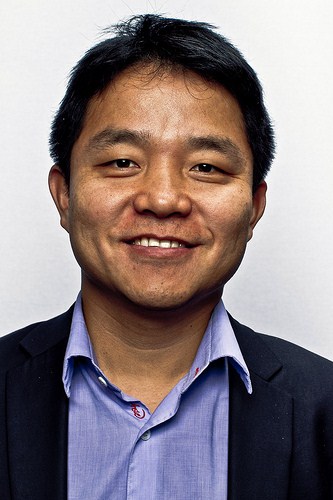 Kyoung Jun Lee is a professor of School of Management & Big Data Analytics in Kyung Hee University (http://www.khu.ac.kr). As the director, he leads AI-BM Lab (Artificial Intelligence and Business Model Lab., AI-BM.net) and Kyung Hee Big Data Research Center, which is a KSF (Korea Science Foundation)-supported National Research Institute.
He is now a Advisory Board Member of Riiid, the world-leading AI-based edutech start-up, 2021 IoT Director of Samsung C&T Construction Division, and non-executive director of User-Centric AI Institute of HAREX Infotech.
He received B.S. (1990), M.S. (1992), and Ph.D. (1995) in Management Science from KAIST. He also has a master degree (2001) in Public Administration of Seoul National University, and finished the Ph.D. course (2003) from the same school.
He worked as a visiting scientist in the Robotics Institute of Carnegie Mellon University, Pittsburgh, USA. from 1996 to 1997, Fulbright visiting professor of MIT(2010) Mobile Experience Lab. and UC Berkeley(2011) BEST Lab. He was an assistant professor of School of Business in Korea University from 1999 to 2001. From 2001 to 2003, he joined the Graduate School of Public Administration, Seoul National University as a visiting assistant professor. He won the IAAI (Innovative Applications of Artificial Intelligence) Awards three times, i.e. in 1995, 1997, and 2020 from AAAI (Association for the Advancement of Artificial Intelligence, formerly American Association for Artificial Intelligence).
His research interests are in designing, analyzing, developing AI-based systems and business models for commerce, factory, media, policy, and sustainablity. He has dozens of patents, approved or pending, and published papers in AI Magazine, Decision Support Systems, Organizational Computing & Electronic Commerce, Electronic Markets, AI Magazine, Electronic Commerce: Research & Applications, European Journal on Operational Research, Expert Systems with Applications, Connections, and Sustainability etc.
He has been involved in founding and advising start-ups in Korea, such as OneQ.com(acquired by Naver), Mobilians.co.kr (the top phone-based Internet payment company in Korea), and FNBC (acquired by Galaxia Communications) etc. He is currently a non-executive director of HAREX Infotec, the user-centric payment platform, and was previously a non-executive director of YES24.com, which plays the role of Amazon.com in Korean online book store industry. He is the founder of Benple Inc. and Allwinware Inc.
He has been also closely working with incumbent companies such as LG Electronics, Samsung Electronics, Google Korea, IBK Bank, SKT(SK Telecom), BC Card, Naver(The top Internet Company in Korea), Samsung, KT (Korea Telecom), and KTO (Korea Tourism Organization) etc. for developing new AI systems and business models, business design methodology, and strategy. He was the director of ICEC (International Center for Electronic Commerce, http://icec.net) from 2014 to 2020.
댓글을 달려면 로그인해야 합니다.